[SDL3] SDL Audio Wav

SDL, raylib 2025. 12. 16. 18:30 |
반응형

SDL3를 이용해 wav 파일을 간단히 플레이 해 보자.


#define SDL_MAIN_USE_CALLBACKS 1  /* use the callbacks instead of main() */
#include <SDL3/SDL.h>
#include <SDL3/SDL_main.h>

static SDL_AudioStream* stream = NULL;
static Uint8* wav_data = NULL;
static Uint32 wav_data_len = 0;

/* This function runs once at startup. */
SDL_AppResult SDL_AppInit(void** appstate, int argc, char* argv[])
{
	SDL_AudioSpec spec;
	char* wav_path = NULL;

	SDL_SetAppMetadata("Example Audio Load Wave", "1.0", "Sean");

	if (!SDL_Init(SDL_INIT_AUDIO)) {
		SDL_Log("Couldn't initialize SDL: %s", SDL_GetError());
		return SDL_APP_FAILURE;
	}

	/* Load the .wav file from wherever the app is being run from. */
	//SDL_asprintf(&wav_path, "%smusic.wav", SDL_GetBasePath());  /* allocate a string of the full file path */
	SDL_asprintf(&wav_path, "music.wav");  // assume current working directory
	if (!SDL_LoadWAV(wav_path, &spec, &wav_data, &wav_data_len)) {
		SDL_Log("Couldn't load .wav file: %s", SDL_GetError());
		return SDL_APP_FAILURE;
	}

	SDL_free(wav_path);  /* done with this string. */

	// Print out some info about the .wav file we loaded.
	int bitDepth = SDL_AUDIO_BITSIZE(spec.format);
	int bytesPerSecond = spec.freq * spec.channels * (bitDepth / 8);
	float duration = (float)wav_data_len / (float)bytesPerSecond;
	SDL_Log("Duration: %d:%d\n", (int)duration / 60, (int)duration % 60);

	/* Create our audio stream in the same format as the .wav file. It'll convert to what the audio hardware wants. */
	stream = SDL_OpenAudioDeviceStream(SDL_AUDIO_DEVICE_DEFAULT_PLAYBACK, &spec, NULL, NULL);
	if (!stream) {
		SDL_Log("Couldn't create audio stream: %s", SDL_GetError());
		return SDL_APP_FAILURE;
	}

	/* SDL_OpenAudioDeviceStream starts the device paused. You have to tell it to start! */
	SDL_ResumeAudioStreamDevice(stream);

	return SDL_APP_CONTINUE;  /* carry on with the program! */
}

/* This function runs when a new event (mouse input, keypresses, etc) occurs. */
SDL_AppResult SDL_AppEvent(void* appstate, SDL_Event* event)
{
	switch (event->type) {
	case SDL_EVENT_QUIT:
		return SDL_APP_SUCCESS;  /* end the program, reporting success to the OS. */
	case SDL_EVENT_KEY_DOWN:
		// Since there's no window, this won't work, but if there were, it would log key presses.
		SDL_Log("Key down: %s\n", SDL_GetKeyName(event->key.key));
		if (event->key.key == SDLK_ESCAPE) {
			return SDL_APP_SUCCESS;  /* end the program, reporting success to the OS. */
		}
		break;
	default:
		break;
	}

	return SDL_APP_CONTINUE;  /* carry on with the program! */
}

/* This function runs once per frame, and is the heart of the program. */
SDL_AppResult SDL_AppIterate(void* appstate)
{
	/* see if we need to feed the audio stream more data yet.
	   We're being lazy here, but if there's less than the entire wav file left to play,
	   just shove a whole copy of it into the queue, so we always have _tons_ of
	   data queued for playback. */
	if (SDL_GetAudioStreamQueued(stream) < (int)wav_data_len) {
		/* feed more data to the stream. It will queue at the end, and trickle out as the hardware needs more data. */
		SDL_PutAudioStreamData(stream, wav_data, wav_data_len);
		// 이렇게 한 번만 넣어주면 끝까지 재생됨.
		// 이 경우, wav_data_len 만큼의 데이터를 계속 넣어주게 되므로 재생이 끝난 후에도 계속 반복 재생됨.
	}

	return SDL_APP_CONTINUE;  /* carry on with the program! */
}

/* This function runs once at shutdown. */
void SDL_AppQuit(void* appstate, SDL_AppResult result)
{
	SDL_free(wav_data);
	SDL_DestroyAudioStream(stream);

	SDL_Quit();
}
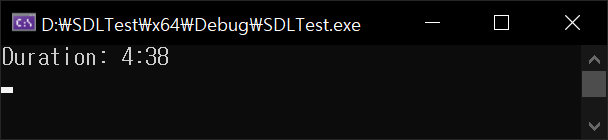
 

플레이 시간이 표시되고 wav 파일이 플레이 된다.


반응형
Posted by J-sean
:
반응형

2021.12.23 - [C#] - C# TCP/IP Image transfer - 이미지(파일) 전송 1 에서 만든 프로그램을 개선해 보자.

네트워크 접속 지연으로 발생할 수 있는 에러를 처리하고 스레드를 사용해 네트워크 접속 대기 시 freeze되는 부분을 개선했다.


폼 디자인은 2021.12.23 - [C#] - C# TCP/IP Image transfer - 이미지(파일) 전송 1 과 동일하다.


1
2
3
4
5
6
7
8
9
10
11
12
13
14
15
16
17
18
19
20
21
22
23
24
25
26
27
28
29
30
31
32
33
34
35
36
37
38
39
40
41
42
43
44
45
46
47
48
49
50
51
52
53
54
55
56
57
58
59
60
61
62
63
64
65
66
67
68
69
70
71
72
73
74
75
76
77
78
79
80
81
82
83
84
85
86
87
88
89
90
91
92
93
94
95
96
97
98
99
100
101
102
103
104
105
106
107
108
109
110
111
112
113
114
115
116
117
118
119
120
121
122
using System;
using System.Collections.Generic;
using System.ComponentModel;
using System.Data;
using System.Drawing;
using System.Linq;
using System.Text;
using System.Threading.Tasks;
using System.Windows.Forms;
 
using System.Threading;
using System.Net;
using System.Net.Sockets;
using System.IO;
 
namespace Server
{
    public partial class Form1 : Form
    {
        TcpListener listener;
        TcpClient client;
        NetworkStream networkStream;
        MemoryStream memoryStream;
        Bitmap bitmap;
        IPHostEntry ipHostEntry;
        Thread thread;
 
        string serverIP;
        int serverPort;
        byte[] data = new byte[1048576]; // 1MB
        byte[] dataSizeFromClient;
        int receivedDataSize;
        int expectedDataSize;
 
        public Form1()
        {
            InitializeComponent();
 
            pictureBox1.SizeMode = PictureBoxSizeMode.StretchImage;
 
            serverPort = 7000;
            // 호스트 이름으로 검색되는 첫 번째 IP4 주소 확인
            string hostName = Dns.GetHostName();
            ipHostEntry = Dns.GetHostEntry(hostName);
            foreach (IPAddress address in ipHostEntry.AddressList)
            {
                if (address.AddressFamily == AddressFamily.InterNetwork)
                {
                    serverIP = address.ToString();
                    break;
                }
            }
            listBox1.Items.Add("Server IP: " + serverIP);
 
            listener = new TcpListener(IPAddress.Any, serverPort);
            //listener = new TcpListener(IPAddress.Parse("127.0.0.1"), serverPort);            
        }
 
        private void ThreadProc()
        {
            listener.Start();
 
            client = listener.AcceptTcpClient();
            listBox1.Items.Add("Client IP: " + client.Client.RemoteEndPoint.ToString().Split(':')[0]);
 
            networkStream = client.GetStream();
 
            receivedDataSize = 0;
            dataSizeFromClient = new byte[sizeof(int)];
 
            if (networkStream.CanRead)
            {
                // 클라이언트로 부터 받아야 할 데이터 사이즈 정보 확인.
                networkStream.Read(dataSizeFromClient, 0, dataSizeFromClient.Length);
                expectedDataSize = BitConverter.ToInt32(dataSizeFromClient, 0);
                listBox1.Items.Add("Expected data size: " + (expectedDataSize / 1024).ToString() + "KB");
 
                // 데이터 송신
                do
                {
                    receivedDataSize += networkStream.Read(data, receivedDataSize, data.Length - receivedDataSize);
                    // Reads data from the NetworkStream and stores it to a byte array.                    
                } while (networkStream.DataAvailable);
                // while (expectedDataSize > receivedDataSize);
            }
 
            listBox1.Items.Add("Data received: " + (receivedDataSize / 1024).ToString() + "KB");
            memoryStream = new MemoryStream(data, 0, receivedDataSize);
            // Initializes a new non-resizable instance of the MemoryStream class
            // based on the specified region (index) of a byte array.            
            bitmap = new Bitmap(memoryStream);
            pictureBox1.Image = bitmap;
 
            listener.Stop();
            client.Close();
            networkStream.Close();
            memoryStream.Close();
        }
 
 
        private void button1_Click(object sender, EventArgs e)
        {
            // 클라이언트 접속 대기를 위한 스레드 생성(스레드는 1개만 생성한다)
            if (thread == null || !thread.IsAlive)
            {
                thread = new Thread(new ThreadStart(ThreadProc));
                thread.Start();
                listBox1.Items.Add("Waiting for a client...");
            }
        }
 
        private void Form1_FormClosing(object sender, FormClosingEventArgs e)
        {
            if (thread != null && thread.IsAlive)
            {
                // 클라이언트 접속 대기 종료
                listener.Stop();
                //thread.Abort();
            }
        }
    }
}


서버 코드를 작성하고 빌드한다.


1
2
3
4
5
6
7
8
9
10
11
12
13
14
15
16
17
18
19
20
21
22
23
24
25
26
27
28
29
30
31
32
33
34
35
36
37
38
39
40
41
42
43
44
45
46
47
48
49
50
51
52
53
54
55
56
57
58
59
60
61
62
63
64
65
66
67
68
69
70
71
72
73
74
75
76
77
78
79
80
81
82
83
84
85
86
87
88
89
90
91
92
93
94
95
96
97
98
99
100
101
102
103
104
105
106
107
108
using System;
using System.Collections.Generic;
using System.ComponentModel;
using System.Data;
using System.Drawing;
using System.Linq;
using System.Text;
using System.Threading.Tasks;
using System.Windows.Forms;
 
using System.Threading;
using System.Net;
using System.Net.Sockets;
using System.IO;
 
namespace Client
{
    public partial class Form1 : Form
    {
        TcpClient client;
        NetworkStream networkStream;
        MemoryStream memoryStream;
        Bitmap screen;
        Thread thread;
 
        string serverIP;
        int serverPort;
        byte[] data;
        byte[] dataSizeForServer;
 
        public Form1()
        {
            InitializeComponent();
 
            pictureBox1.SizeMode = PictureBoxSizeMode.StretchImage;
            textBox1.Text = "192.168.0.100";
        }
 
        private void ThreadProc()
        {
            screen = GetScreen();
            // pictureBox1.Image = screen;
            // 위 명령을 여기서 실행하면 아래와 같은 에러가 발생한다. (이해할 수 없다.)
            // System.InvalidOperationException: 개체를 다른 곳에서 사용하고 있습니다.
            // 서버 접속(아래 try-catch) 이후 실행하면 된다.
 
            memoryStream = new MemoryStream();
 
            screen.Save(memoryStream, System.Drawing.Imaging.ImageFormat.Png);
            data = memoryStream.ToArray();
 
            serverIP = textBox1.Text;
            serverPort = 7000;
            try
            {
                client = new TcpClient(serverIP, serverPort);
            }
            catch (Exception e)
            {
                listBox1.Items.Add(e.Message);
                memoryStream.Close();
 
                return;
            }
 
            listBox1.Items.Add("Connected to: " + client.Client.RemoteEndPoint.ToString().Split(':')[0]);
            pictureBox1.Image = screen;
 
            networkStream = client.GetStream();
 
            if (networkStream.CanWrite)
            {
                // 보낼 데이터 사이즈를 서버에 미리 공유
                dataSizeForServer = BitConverter.GetBytes(data.Length);
                networkStream.Write(dataSizeForServer, 0, dataSizeForServer.Length);
 
                // 데이터 전송
                networkStream.Write(data, 0, data.Length);
                listBox1.Items.Add("Data sent: " + (data.Length / 1024).ToString() + "KB");
            }
 
            client.Close();
            networkStream.Close();
            memoryStream.Close();
        }
 
        private void button1_Click(object sender, EventArgs e)
        {
            // 클라이언트 접속 대기를 위한 스레드 생성(스레드는 1개만 생성한다)
            if (thread == null || !thread.IsAlive)
            {
                thread = new Thread(new ThreadStart(ThreadProc));
                thread.Start();
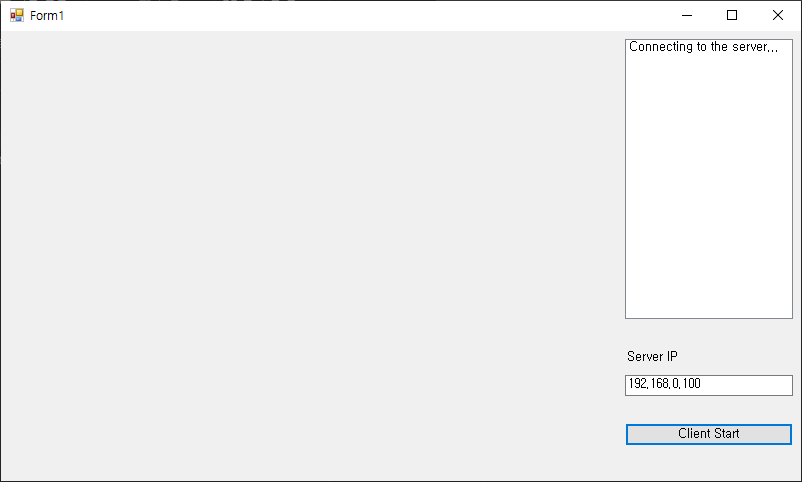
                listBox1.Items.Add("Connecting to the server...");
            }
        }
 
        private Bitmap GetScreen()
        {
            Bitmap bitmap = new Bitmap(Screen.PrimaryScreen.Bounds.Width, Screen.PrimaryScreen.Bounds.Height);
            Graphics g = Graphics.FromImage(bitmap);
            g.CopyFromScreen(0000, bitmap.Size);
            g.Dispose();
 
            return bitmap;
        }
    }
}


클라이언트 코드를 작성하고 빌드한다.


서버 실행 후 클라이언트 접속 대기 상태에서도 freeze 되지 않는다.


클라이언트 실행 후 서버 접속 시도 중인 상태에서도 freeze 되지 않는다. (서버를 실행하지 않고 테스트)


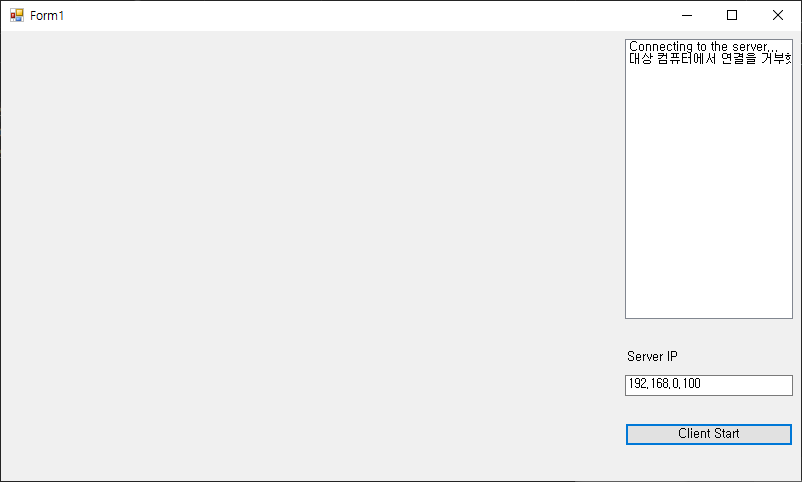
서버 접속에 실패하더라도 클라이언트는 종료되지 않고 에러 메세지만 보낸다.


서버, 클라이언트가 문제 없이 연결되면 정상 작동한다.


※ 참고

2021.12.25 - [C#] - C# TCP/IP Image transfer - 이미지(파일) 전송 3


반응형
Posted by J-sean
:
반응형

You can stream a video file with VideoView.


<AndroidManifest.xml>

1
    <uses-permission android:name="android.permission.INTERNET"/>


<MainActivity.java>

1
2
3
4
5
6
7
8
9
10
11
12
13
14
15
16
17
18
19
20
21
22
23
24
25
26
27
28
29
30
31
32
33
34
35
36
37
38
39
40
41
42
43
44
45
46
47
48
49
50
51
52
53
54
55
56
57
58
59
60
61
62
63
64
65
66
67
68
69
70
71
72
73
74
75
76
77
78
public class MainActivity extends AppCompatActivity {
 
    VideoView videoView;
 
    @Override
    protected void onCreate(Bundle savedInstanceState) {
        super.onCreate(savedInstanceState);
        setContentView(R.layout.activity_main);
 
        videoView = findViewById(R.id.videoView);
 
        MediaController mediaController = new MediaController(this);
        videoView.setMediaController(mediaController);
 
        Button button = findViewById(R.id.button);
        button.setOnClickListener(new View.OnClickListener() {
            @Override
            public void onClick(View v) {
                videoView.setVideoURI(Uri.parse("http://nexoft.tk/data/WhileYouWereSleeping.mp4")); // or your video file url.
                videoView.requestFocus();
                videoView.start();
            }
        });
 
        videoView.setOnCompletionListener(new MediaPlayer.OnCompletionListener() {
            @Override
            public void onCompletion(MediaPlayer mp) {
                Toast.makeText(getApplicationContext(), "Video play completed", Toast.LENGTH_SHORT).show();
            }
        });
 
        videoView.setOnErrorListener(new MediaPlayer.OnErrorListener() {
            @Override
            public boolean onError(MediaPlayer mp, int what, int extra) {
                String message;
 
                switch (what) {
                    case MediaPlayer.MEDIA_ERROR_UNKNOWN:
                        message = "MEDIA_ERROR_UNKNOWN";
                        break;
 
                    case MediaPlayer.MEDIA_ERROR_SERVER_DIED:
                        message = "MEDIA_ERROR_SERVER_DIED";
                        break;
 
                    default:
                        message = "No what";
                }
 
                switch (extra) {
                    case MediaPlayer.MEDIA_ERROR_IO:
                        message += ", MEDIA_ERROR_IO";
                        break;
 
                    case MediaPlayer.MEDIA_ERROR_MALFORMED:
                        message += ", MEDIA_ERROR_MALFORMED";
                        break;
 
                    case MediaPlayer.MEDIA_ERROR_UNSUPPORTED:
                        message += ", MEDIA_ERROR_UNSUPPORTED";
                        break;
 
                    case MediaPlayer.MEDIA_ERROR_TIMED_OUT:
                        message += ", MEDIA_ERROR_TIMED_OUT";
                        break;
 
                    default:
                        message += ", No extra";
                }
                Toast.makeText(getApplicationContext(), message, Toast.LENGTH_SHORT).show();
 
                //    Returns true if the method handled the error, false if it didn't. Returning false, or not having an OnErrorListener
                //    at all, will cause the OnCompletionListener to be called.
                return true;
            }
        });
    }
}


Run the app and click the PLAY button.


It may not be able to stream the video and show an error message in AVD.


It can stream the video in the actual device.


반응형
Posted by J-sean
:
반응형

You can stream an audio file with MediaPlayer.


<AndroidManifest.xml>

1
    <uses-permission android:name="android.permission.INTERNET"/>


<MainActivity.java>

1
2
3
4
5
6
7
8
9
10
11
12
13
14
15
16
17
18
19
20
21
22
23
24
25
26
27
28
29
30
31
32
33
34
35
36
37
38
39
40
41
42
43
44
45
46
47
48
49
50
51
52
53
54
55
56
57
58
59
60
61
62
63
64
65
66
67
68
69
70
71
72
73
74
75
76
77
78
79
80
81
82
83
public class MainActivity extends AppCompatActivity {
 
    MediaPlayer mediaPlayer;
    int position = 0;
    boolean isPaused = false;   // To prevent false resume.
 
    @Override
    protected void onCreate(Bundle savedInstanceState) {
        super.onCreate(savedInstanceState);
        setContentView(R.layout.activity_main);
 
        // Play
        Button button = findViewById(R.id.button);
        button.setOnClickListener(new View.OnClickListener() {
            public void onClick(View view) {
                if (mediaPlayer != null) {
                    mediaPlayer.release();
                }
                try {
                    mediaPlayer = new MediaPlayer();
                    mediaPlayer.setDataSource("http://nexoft.tk/download/Davich.mp3");  // or your audio file url.
                    mediaPlayer.prepare();
                    mediaPlayer.start();
                    isPaused = false;
                } catch (Exception e)
                {
                    e.printStackTrace();
                }
                Toast.makeText(getApplicationContext(), "Media player started", Toast.LENGTH_SHORT).show();
            }
        });
 
        // Stop
        Button button2 = findViewById(R.id.button2);
        button2.setOnClickListener(new View.OnClickListener() {
            @Override
            public void onClick(View v) {
                if (mediaPlayer != null) {
                    mediaPlayer.stop();
                    isPaused = false;
                    Toast.makeText(getApplicationContext(), "Media player stopped", Toast.LENGTH_SHORT).show();
                }
            }
        });
 
        // Pause
        Button button3 = findViewById(R.id.button3);
        button3.setOnClickListener(new View.OnClickListener() {
            @Override
            public void onClick(View v) {
                if (mediaPlayer != null && mediaPlayer.isPlaying()) {
                    position = mediaPlayer.getCurrentPosition();
                    mediaPlayer.pause();
                    isPaused = true;
                    Toast.makeText(getApplicationContext(), "Media player paused at " + position / 1000 + " sec", Toast.LENGTH_SHORT).show();
                }
            }
        });
 
        // Resume
        Button button4 = findViewById(R.id.button4);
        button4.setOnClickListener(new View.OnClickListener() {
            @Override
            public void onClick(View v) {
                if (mediaPlayer != null && !mediaPlayer.isPlaying() && isPaused == true) {
                    mediaPlayer.start();
                    mediaPlayer.seekTo(position);
                    isPaused = false;
                    Toast.makeText(getApplicationContext(), "Media player resumed at " + position / 1000 + " sec", Toast.LENGTH_SHORT).show();
                }
            }
        });
    }
 
    @Override
    protected void onDestroy() {
        super.onDestroy();
 
        if (mediaPlayer != null) {
            mediaPlayer.release();
        }
    }
}


Run the app and start the audio file.


반응형
Posted by J-sean
: