반응형

Gemini API를 사용해 보자.


Python

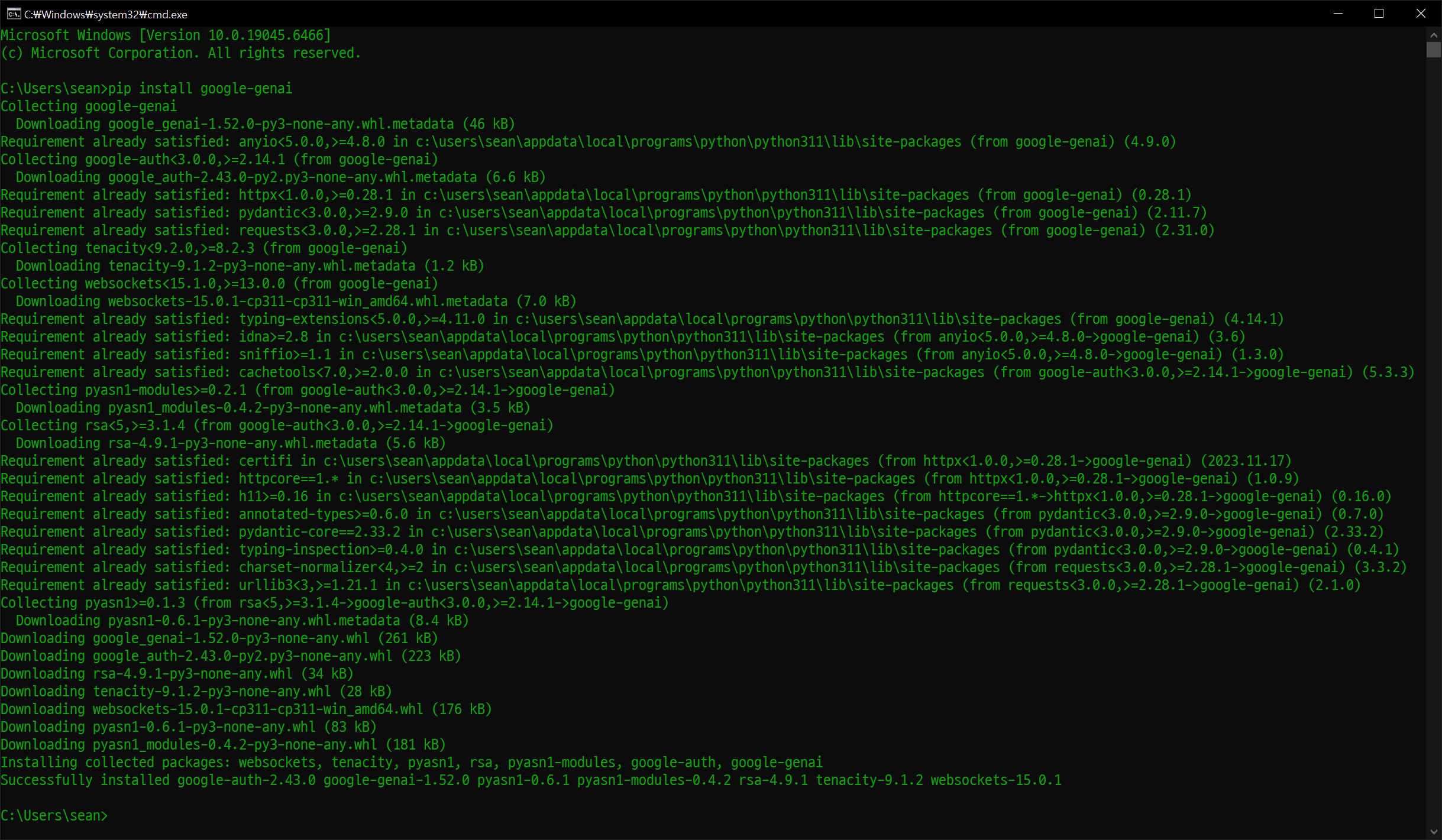
google-genai 라이브러리를 설치한다.


from google import genai

client = genai.Client(api_key="your_api_key")

response = client.models.generate_content(
    model="gemini-2.5-flash",
    contents="Gemini에 대해 짧게 설명해 줘."
)
print(response.text)


API Key는 Google AI Studio에서 발급 받는다.


C#
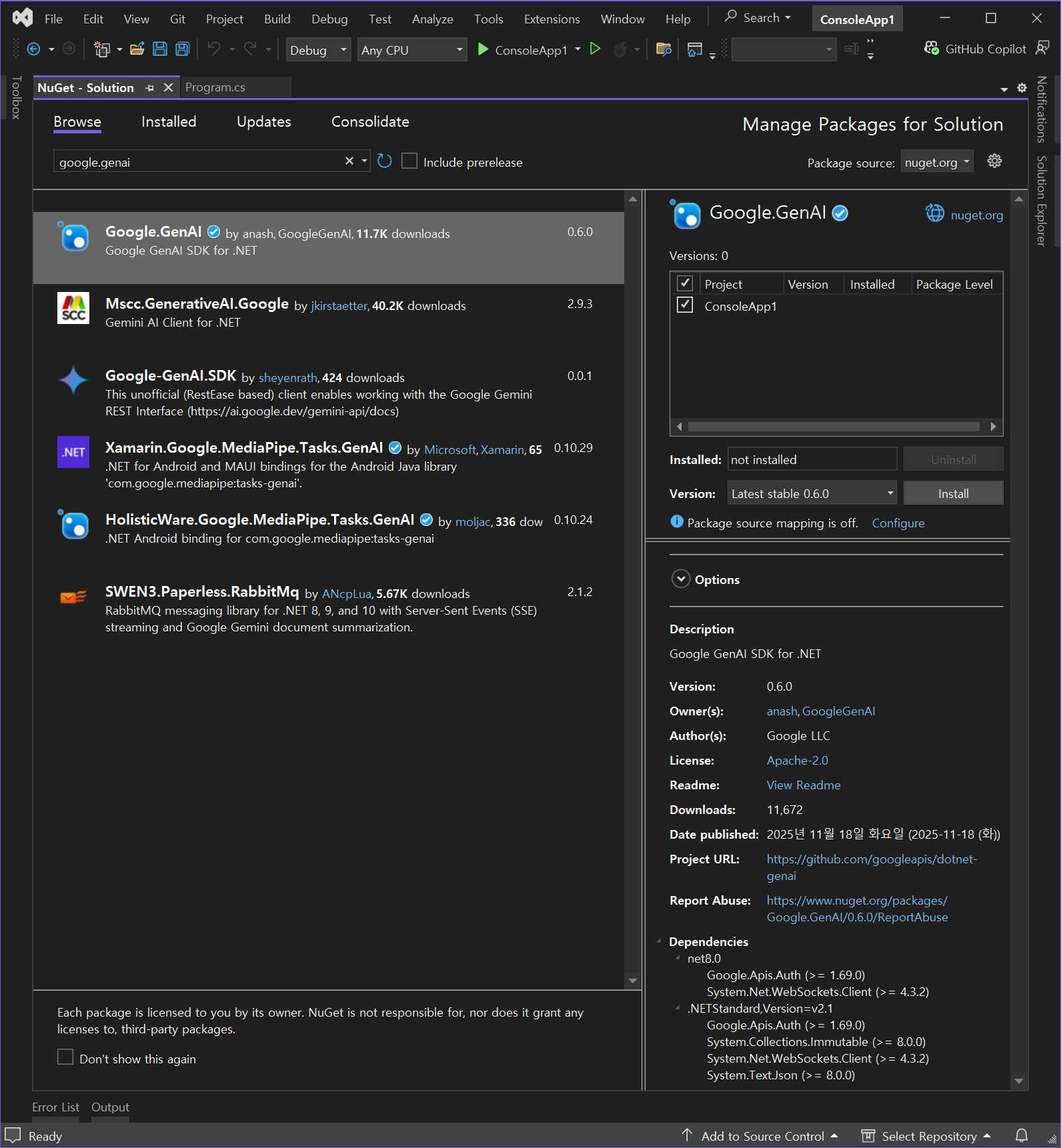
Google.GenAI를 설치한다.

콘솔창 작업 디렉토리에서 아래 명령을 실행해도 된다.

dotnet add package Google.GenAI


using Google.GenAI;

Client client = new Client(apiKey: "your_api_key");
Google.GenAI.Types.GenerateContentResponse response = await client.Models.GenerateContentAsync(
    model: "gemini-2.5-flash",
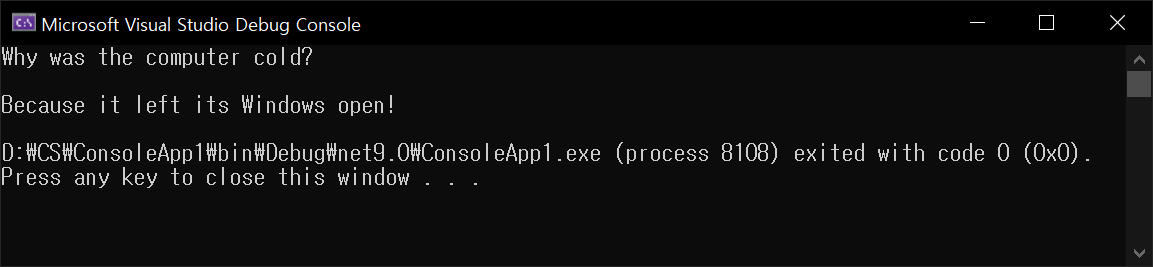
    contents: "Tell me a joke about computers."
    );

Console.WriteLine(response.Candidates[0].Content.Parts[0].Text);


※ 참고

Gemini API

Gemini API SDK Python

Gemini API SDK C#

FastMCP Gemini SDK


반응형
Posted by J-sean
:
반응형

윈도우 API 함수 파라미터를 분석해 보자.


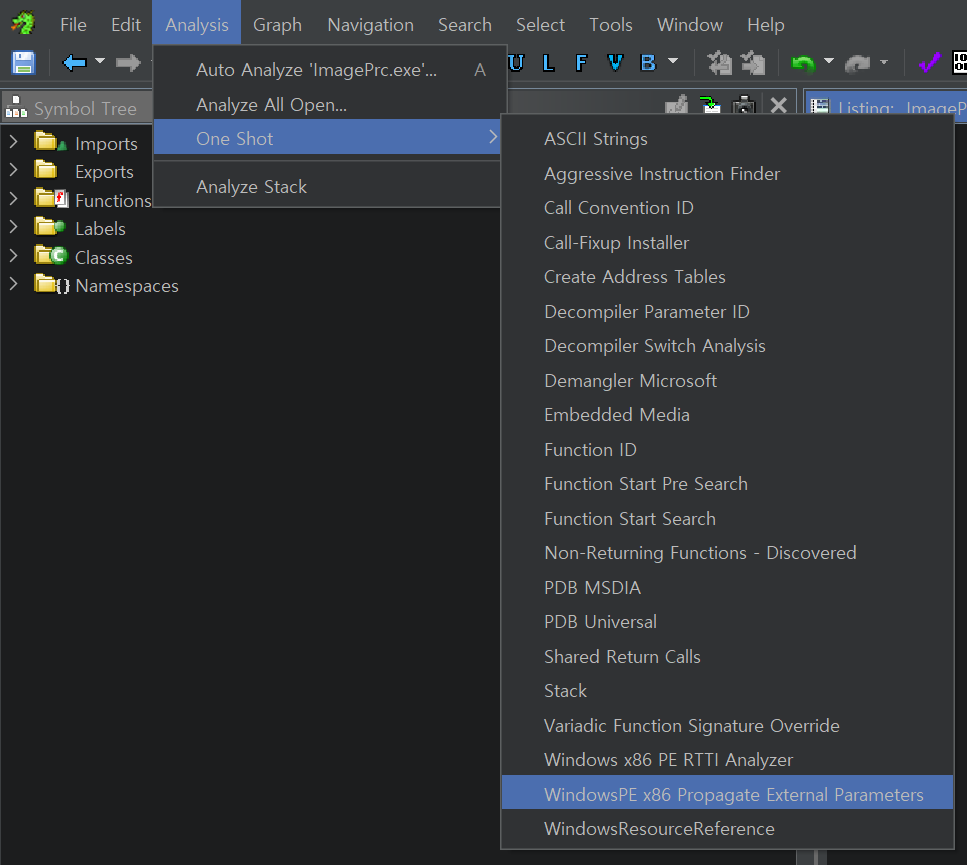
Ghidra의 경우 Analysis - WindowsPE x86 Propagate External Parameters 를 선택한다.

파일을 처음 임포트해서 분석할 때 옵션에서 선택할 수도 있다.


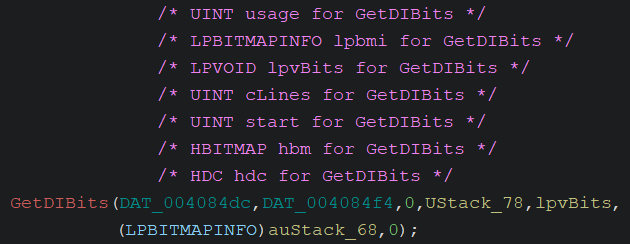
함수의 매개변수가 주석으로 표시된다.


디컴파일러 윈도우에도 동일한 내용이 표시된다.


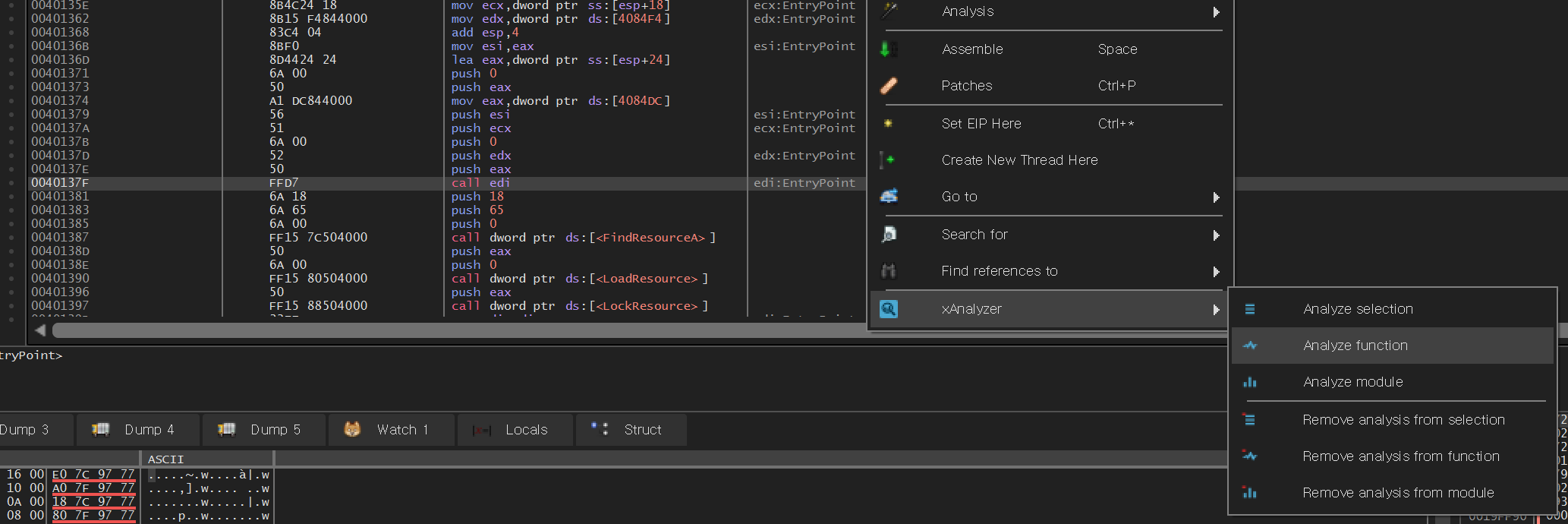
x32dbg/x64dbg의 경우 xAnalyzer를 설치하고 우클릭 - xAnalyzer - Analyze function을 선택한다.

xAnalyzer Link


Ghidra 보다 보기 좋게 표시된다.


반응형
Posted by J-sean
:
반응형

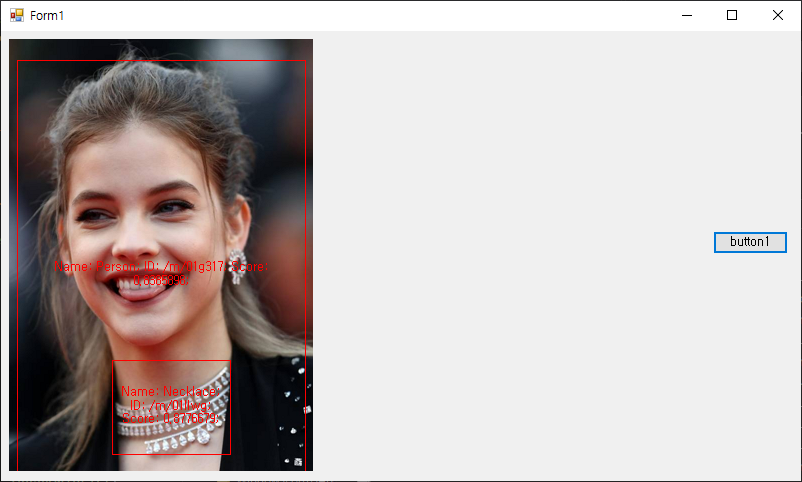
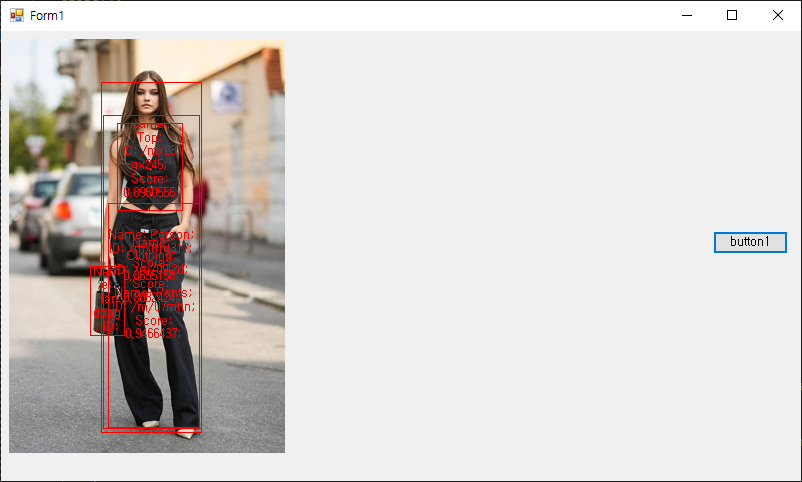
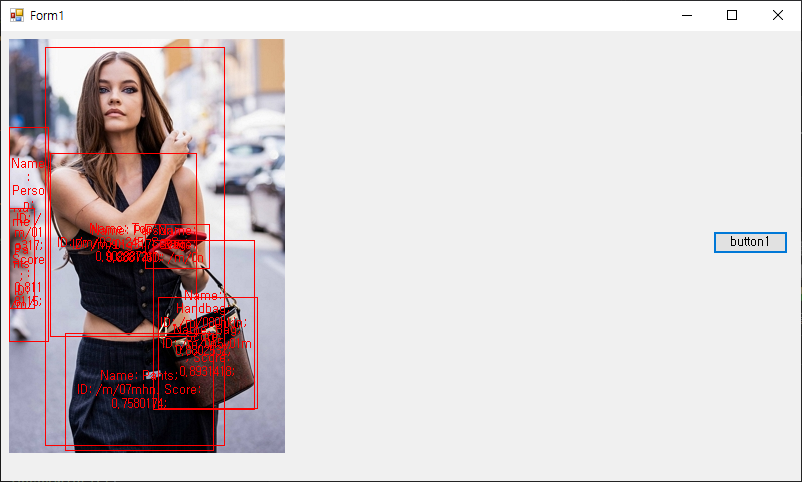
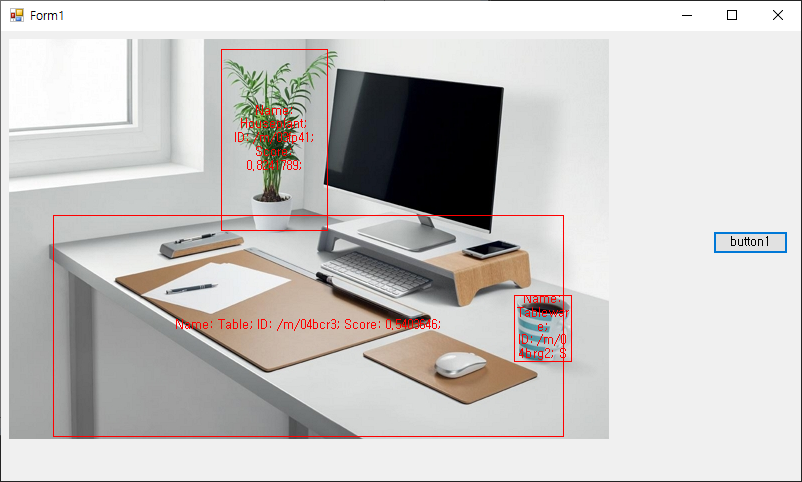
C# WinForm 으로 구글 클라우드 비전 API를 이용해 Detect localized objects in a single image 를 진행해 보자. 아래 링크를 참고해 기본 준비를 한다.

2022.02.11 - [C#] - C# Google Cloud Vision API - 구글 클라우드 비전 API 2


1
2
3
4
5
6
7
8
9
10
11
12
13
14
15
16
17
18
19
20
21
22
23
24
25
26
27
28
29
30
31
32
33
34
35
36
37
38
39
40
41
42
43
44
45
46
47
48
49
50
51
52
53
54
55
56
57
58
59
60
61
62
63
64
65
66
67
68
69
70
71
72
73
74
75
76
77
78
79
80
81
82
83
84
85
86
87
88
89
90
91
92
93
using System;
using System.Collections.Generic;
using System.ComponentModel;
using System.Data;
using System.Drawing;
using System.Linq;
using System.Text;
using System.Threading.Tasks;
using System.Windows.Forms;
 
using Google.Cloud.Vision.V1;
 
namespace WindowsFormsApp1
{
    public partial class Form1 : Form
    {
        ImageAnnotatorClient client;
 
        public Form1()
        {
            InitializeComponent();
 
            try
            {
                client = new ImageAnnotatorClientBuilder
                {
                    CredentialsPath = "your_credentials.json"
                }.Build();
            }
            catch (Exception exc)
            {
                MessageBox.Show(exc.Message);
                Close();
            }
        }
 
        private void button1_Click(object sender, EventArgs e)
        {
            try
            {
                System.Drawing.Image systemImage;
 
                OpenFileDialog dlg = new OpenFileDialog();
                if (dlg.ShowDialog() == DialogResult.OK)
                {
                    systemImage = System.Drawing.Image.FromFile(dlg.FileName);
                    pictureBox1.Image = systemImage;
 
                    pictureBox1.Refresh();
 
                    Graphics graphics = pictureBox1.CreateGraphics();
 
                    Google.Cloud.Vision.V1.Image visionImage = Google.Cloud.Vision.V1.Image.FromFile(dlg.FileName);
 
                    IReadOnlyList<LocalizedObjectAnnotation> annotations = client.DetectLocalizedObjects(visionImage);
                    foreach (LocalizedObjectAnnotation annotation in annotations)
                    {
                        Google.Protobuf.Collections.RepeatedField<NormalizedVertex> normalizedVertices =
                            annotation.BoundingPoly.NormalizedVertices;
 
                        int imageWidth = systemImage.Width;
                        int imageHeight = systemImage.Height;
                        // Google.Cloud.Vision.V1.Image 는 Width, Height 필드가 없다.
 
                        Rectangle rectangle = new Rectangle(
                            (int)(normalizedVertices[0].X * imageWidth),
                            (int)(normalizedVertices[0].Y * imageHeight),
                            (int)((normalizedVertices[2].X - normalizedVertices[0].X) * imageWidth),
                            (int)((normalizedVertices[2].Y - normalizedVertices[0].Y) * imageHeight)
                            );
                        // BoundingPoly.NormalizedVertices 는 0~1의 범위를 가지는 값이다.
 
                        StringFormat stringFormat = new StringFormat
                        {
                            Alignment = StringAlignment.Center,
                            LineAlignment = StringAlignment.Center
                        };
 
                        graphics.DrawRectangle(System.Drawing.Pens.Red, rectangle);
                        graphics.DrawString($"Name: {annotation.Name}\n ID: {annotation.Mid}\n Score: {annotation.Score}",
                            Font, Brushes.Red, rectangle, stringFormat);
                    }
 
                    graphics.Dispose();
                }
            }
            catch (Exception exc)
            {
                MessageBox.Show(exc.Message);
            }
        }
    }
}


소스를 입력하고 빌드한다.


반응형
Posted by J-sean
:

MariaDB(MySQL) C API

C, C++ 2021. 8. 29. 15:44 |
반응형

MariaDB도 MySQL과 거의 비슷한 방식으로 C API를 사용할 수 있다.

2018.11.20 - [C, C++] - MySQL C API

기본적인 내용은 MySQL C API와 거의 같고 아래와 같이 Project Property Pages에 Include/Library Directories 및 파일 이름만 변경 된다.


  • Project - XXX Properties... - Configuration Properties - C/C++ - General - Additional Include Directories - C:\Program Files\MariaDB 10.6\include
  • Project - XXX Properties... - Configuration Properties - Linker - General - Additional Library Directories - C:\Program Files\MariaDB 10.6\lib


아래 두 파일은 프로젝트 폴더에 복사한다. (libmysql.lib, libmysql.dll 이 아니다)

  • libmariadb.lib
  • libmariadb.dll


1
2
3
4
5
6
7
8
9
10
11
12
13
14
15
16
17
18
19
20
21
22
23
24
25
26
27
28
29
30
31
32
33
34
35
36
37
38
39
40
41
42
43
44
45
46
47
48
49
50
51
52
53
54
55
56
57
#include <stdio.h>
#include <mysql/mysql.h>
 
#pragma comment (lib, "libmariadb.lib")
 
int main()
{
    MYSQL mysql;            // MariaDB(MySQL) 정보를 담을 구조체
    MYSQL* mysqlPtr = NULL;    // MariaDB(MySQL) connection 핸들러
    MYSQL_RES* Result = NULL;        // 쿼리 성공시 결과를 담는 구조체 포인터
    MYSQL_ROW Row;            // 쿼리 성공시 결과로 나온 행의 정보를 담는 구조체
    int stat;                // 쿼리 요청 후 결과
 
    printf("MariaDB(MySQL) Client Version: %s\n\n", mysql_get_client_info());
    // Returns client version information as a string
 
    mysql_init(&mysql); // Gets or initializes a MYSQL structure 
 
    mysqlPtr = mysql_real_connect(&mysql, "127.0.0.1""root""password""database"3306, (char*)NULL0);
    // Connects to a MariaDB(MySQL) server
 
    if (mysqlPtr == NULL)
    {
        printf("MariaDB(MySQL) connection error: %s\n", mysql_error(&mysql));
        // Returns the error message for the most recently invoked MariaDB(MySQL) function
        return 1;
    }
 
    // MariaDB(MySQL)에서 사용하는 문자세트를 Visual Studio가 사용하는 euc-kr로 바꾸기
    mysql_query(mysqlPtr, "set session character_set_connection=euckr");
    mysql_query(mysqlPtr, "set session character_set_results=euckr");
    mysql_query(mysqlPtr, "set session character_set_client=euckr");
 
    const char* Query = "SELECT * FROM table";
    stat = mysql_query(mysqlPtr, Query);    // Executes an SQLquery specified as a null-terminated string
    if (stat != 0)
    {
        printf("MariaDB(MySQL) connection error: %s\n", mysql_error(&mysql));
        return 1;
    }
 
    Result = mysql_store_result(mysqlPtr);    // Retrieves a complete result set to the client
    printf("Number of rows: %I64d\nNumber of columns: %d\n\n", Result->row_count, Result->field_count);
    while ((Row = mysql_fetch_row(Result)) != NULL)    // Fetches the next row from the result set 
    {
        for (unsigned int i = 0; i < Result->field_count; i++)
        {
            printf("%s ", Row[i]);
        }
        printf("\n");
    }
    
    mysql_free_result(Result);    // Frees memory used by a result set
    mysql_close(mysqlPtr);    // Closes a server connection
 
    return 0;
}


반응형
Posted by J-sean
:
반응형

Python에서 windows API를 사용 할 수 있게 해 주는 모듈이다.

간단한 Desktop GUI 예제:


1
2
3
4
5
6
7
8
9
10
11
12
13
14
15
16
17
18
19
20
21
22
23
24
25
26
27
28
29
import win32api
import win32gui
import win32con
import win32ui
 
#hinstance = win32api.GetModuleHandle(None)
 
hWnd = win32gui.GetDesktopWindow()
# Retrieves a handle to the desktop window. The desktop window covers the entire screen.
# The desktop window is the area on top of which other windows are painted.
hdc = win32gui.GetDC(hWnd)
#win32gui.GetDC(None)
# A handle to the window whose DC is to be retrieved. If this value is NULL, GetDC
# retrieves the DC for the entire screen.
 
hMemDC = win32gui.CreateCompatibleDC(hdc)
 
hImage = win32gui.LoadImage(None, "cat.bmp", win32con.IMAGE_BITMAP, 00, win32con.LR_LOADFROMFILE | win32con.LR_CREATEDIBSECTION);
# Loads an icon, cursor, animated cursor, or bitmap
 
hOldBitmap = win32gui.SelectObject(hMemDC, hImage)
win32gui.BitBlt(hdc, 505050 + 40050 + 272, hMemDC, 00, win32con.SRCCOPY) # Image(400, 272) at (50, 50)
# The BitBlt function performs a bit-block transfer of the color data corresponding to a rectangle of pixels
# from the specified source device context into a destination device context.
 
win32gui.SelectObject(hMemDC, hOldBitmap)
win32gui.DeleteObject(hImage)
win32gui.DeleteDC(hMemDC)
win32gui.ReleaseDC(hWnd, hdc)
cs


결과


실행 방식에 따라 제대로 표시가 안되는 경우가 있다.


1) 스크립트파일 - 우클릭 - 연결 프로그램 - Python - 표시가 안되는 경우가 있다.

2) Console - 스크립트 파일 실행 - 잘 표시 된다.


반응형
Posted by J-sean
:
반응형

Python에서 windows API를 사용 할 수 있게 해 주는 모듈이다.


간단한 Desktop GUI 예제:

1
2
3
4
5
6
7
8
9
10
11
12
13
14
15
16
17
18
19
20
21
22
23
24
25
26
27
28
29
30
31
32
33
34
35
36
37
38
39
40
41
42
43
44
45
46
47
48
49
50
import win32api
import win32gui
import win32con
import win32ui
 
hWnd = win32gui.GetDesktopWindow()
# Retrieves a handle to the desktop window. The desktop window covers the entire screen.
# The desktop window is the area on top of which other windows are painted.
hdc = win32gui.GetDC(hWnd)
#win32gui.GetDC(None)
# A handle to the window whose DC is to be retrieved. If this value is NULL, GetDC
# retrieves the DC for the entire screen.
 
red = win32api.RGB(25500)
win32gui.SetPixel(hdc, 00, red)  # (0, 0)에 빨간 점 그리기
 
MyPen = win32gui.CreatePen(win32con.PS_SOLID, 5, win32api.RGB(0,0,255));
OldPen = win32gui.SelectObject(hdc, MyPen);
 
win32gui.Rectangle(hdc, 5050100100# (50, 50, 100, 100)에 파란 선으로 사각형 그리기
 
win32gui.SelectObject(hdc, OldPen);
win32gui.DeleteObject(MyPen);
 
# 폰트 만들기
font_spec = {'name':'Arial''height':42'weight':30}
font = win32ui.CreateFont(font_spec)
#lf = win32gui.LOGFONT()
#lf.lfFaceName = "Times New Roman"
#lf.lfHeight = 100
#lf.lfWeight = win32con.FW_NORMAL
#hf = win32gui.CreateFontIndirect(lf)
 
oldfont = win32gui.SelectObject(hdc, font.GetSafeHandle())
 
win32gui.SetTextColor(hdc, win32api.RGB(255,0,0))
win32gui.SetBkColor(hdc, win32api.RGB(255,255,0))
#win32gui.SetBkMode(hdc, win32con.TRANSPARENT)
# Desktop window DC로는 SetBKMode()가 잘 작동하지 않는다
 
text = 'Software Engineer'
rect = win32gui.GetClientRect(hWnd)
win32gui.DrawText(hdc, text, len(text), rect, win32con.DT_CENTER | win32con.DT_VCENTER
                  | win32con.DT_SINGLELINE | win32con.DT_WORDBREAK)
# 화면 가운데 문자열 출력
 
win32gui.SelectObject(hdc,oldfont)
win32gui.DeleteObject(font.GetSafeHandle())
 
win32gui.ReleaseDC(hWnd, hdc)
cs


반응형

'Python' 카테고리의 다른 글

Pillow 이미지 서치(Image Search) 1  (0) 2018.11.30
pywin32 Windows Extensions for Python 2  (0) 2018.11.27
Pillow 화면 변화 감지(Pixel Checksum) 2  (0) 2018.11.21
Pillow 화면 변화 감지(Pixel Checksum) 1  (0) 2018.11.20
PyMySQL  (2) 2018.11.19
Posted by J-sean
:

Python C API

C, C++ 2018. 11. 21. 15:52 |
반응형

가장 간단하게 Python을 C에 embed 시키는 방법은 Very High Level interface를 사용하는 것이다. VHL interface는 어플리케이션과 직접적인 상관없이 Python script를 실행하기 위한 것이다. Python을 설치했다면 따로 설치할 프로그램은 없다.


관련 문서

Python/C API Reference Manual


우선 Python C API 관련 Include, Library 디렉토리를 프로젝트에 추가한다.

C:\Users\UserName\AppData\Local\Programs\Python\PythonXXX\include

C:\Users\UserName\AppData\Local\Programs\Python\PythonXXX\libs


파이썬 공식 홈페이지에서 다운받은 파이썬 인스톨러 패키지를 설치했다면 Solution Configurations를 Release로 설정한다. Debug 모드로 build할 경우 pythonXX_d.lib를 찾을 수 없다는 에러가 발생한다. pythonXX_d.lib 파일을 생성하려면 파이썬 소스를 받아서 직접 컴파일해야 한다.


예제:


#pragma comment(lib, "python36.lib")
#include <Python.h>

int main(int argc, char *argv[])
{
    wchar_t *program = Py_DecodeLocale(argv[0], NULL);
    // Decode a byte string from the locale encoding with the surrogateescape error handler:
    // undecodable bytes are decoded as characters in range U+DC80..U+DCFF. If a byte sequence
    // can be decoded as a surrogate character, escape the bytes using the surrogateescape error
    // handler instead of decoding them.
    // Return a pointer to a newly allocated wide character string, use PyMem_RawFree() to free
    // the memory. If size is not NULL, write the number of wide characters excluding the null
    // character into *size
    if (program == NULL) {
        fprintf(stderr, "Fatal error: cannot decode argv[0]\n");
        exit(1);
    }
    Py_SetProgramName(program);  /* optional but recommended */
    // This function should be called before Py_Initialize() is called for the first time, if it
    // is called at all.It tells the interpreter the value of the argv[0] argument to the main()
    // function of the program(converted to wide characters).This is used by Py_GetPath() and some
    // other functions below to find the Python run - time libraries relative to the interpreter
    // executable.

    Py_Initialize();
    // Initialize the Python interpreter. In an application embedding Python, this should be called
    // before using any other Python/C API functions
    if (Py_IsInitialized())
    // Return true (nonzero) when the Python interpreter has been initialized, false (zero) if not.
    // After Py_FinalizeEx() is called, this returns false until Py_Initialize() is called again.
    {
        PyRun_SimpleString("print('Hello Python')");
        // This is a simplified interface to PyRun_SimpleStringFlags(), leaving the PyCompilerFlags*
        // argument set to NULL.
        PyRun_SimpleString("from time import time, ctime\n"
            "print('Today is', ctime(time()))\n");
        //PyRun_SimpleString("from time import time, ctime\nprint('Today is', ctime(time()))\n");

        if (Py_FinalizeEx() < 0)
        // Undo all initializations made by Py_Initialize() and subsequent use of Python/C API
        // functions, and destroy all sub-interpreters that were created and not yet destroyed
        // since the last call to Py_Initialize().
        {
            exit(120);
        }
        PyMem_RawFree(program);
        // Frees the memory block pointed to by p, which must have been returned by a previous call
        // to PyMem_RawMalloc(), PyMem_RawRealloc() or PyMem_RawCalloc().
        // Otherwise, or if PyMem_RawFree(p) has been called before, undefined behavior occurs.
        // If p is NULL, no operation is performed.
    }

    return 0;
}


간단히 파이썬 스크립트만 실행시키고 싶다면 아래와 같이 해도 된다.


<test.py>

print("Testing...")


<source.cpp>

#include <iostream>

int main() {
	std::string script = "test.py";	
	std::string command = "python " + script;
	//std::string command = "C:/Users/Sean/AppData/Local/Programs/Python/PythonXXX/python.exe " + script;
	// 빌드된 파일을 실행할땐 상관 없지만 Ctrl+F5로 실행할땐 python.exe의 전체 경로를 다 적어야 한다.

	int result = std::system(command.c_str());
	if (result != 0) {
		std::cerr << "Python script failed: " << result << std::endl;
	}

	return 0;
}


※ 참고

2026.02.19 - [OpenCV] - [OpenCV] Python 에서 C++ DLL 사용하기

2025.02.23 - [OpenCV] - C and Python OpenCV Image Data Share (Memory Mapped File)


반응형
Posted by J-sean
: