using System;
using System.Threading;
using System.Threading.Tasks;

namespace ConsoleApp1
{
    internal class Program
    {
        static void Counter()
        {
            int subCounter = 0;
            for (int i = 0; i < 5; i++)
            {
                Thread.Sleep(1000);
                Console.WriteLine($"Sub Thread counting... {subCounter++}");
            }
        }

        static void Main(string[] args)
        {
            Task task = new Task(Counter);
            task.Start();

            int mainCounter = 0;
            for (int i = 0; i < 5; i++)
            {
                Thread.Sleep(1000);
                Console.WriteLine($"Main Thread counting... {mainCounter++}");
            }

            task.Wait();
        }
    }
}
using System;
using System.Threading;
using System.Threading.Tasks;

namespace ConsoleApp1
{
    internal class Program
    {
        static void Main(string[] args)
        {
            Action counter = () =>
            {
                int subCounter = 0;
                for (int i = 0; i < 5; i++)
                {
                    Thread.Sleep(1000);
                    Console.WriteLine($"Sub Thread counting... {subCounter++}");
                }
            };

            Task task = new Task(counter);
            task.Start();

            int mainCounter = 0;
            for (int i = 0; i < 5; i++)
            {
                Thread.Sleep(1000);
                Console.WriteLine($"Main Thread counting... {mainCounter++}");
            }

            task.Wait();
        }
    }
}
using System;
using System.Threading;
using System.Threading.Tasks;

namespace ConsoleApp1
{
    internal class Program
    {
        static void Main(string[] args)
        {
            Task task = Task.Run(() =>
            {
                int subCounter = 0;
                for (int i = 0; i < 5; i++)
                {
                    Thread.Sleep(1000);
                    Console.WriteLine($"Task counting... {subCounter++}");
                }
            });

            int mainCounter = 0;
            for (int i = 0; i < 5; i++)
            {
                Thread.Sleep(1000);
                Console.WriteLine($"Main Thread counting... {mainCounter++}");
            }

            task.Wait();
        }
    }
}
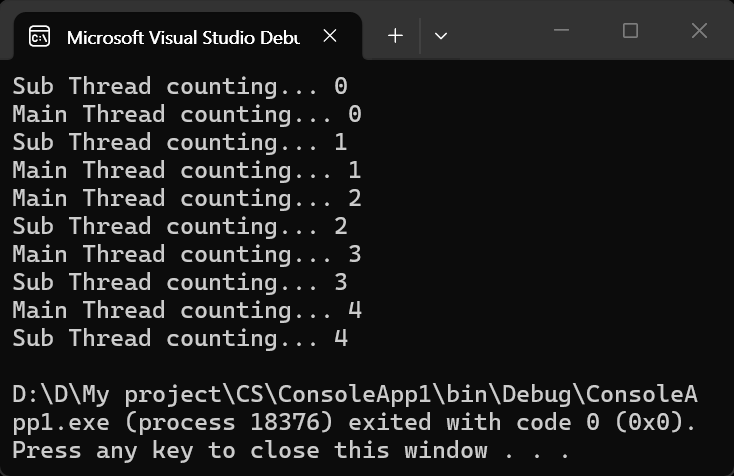
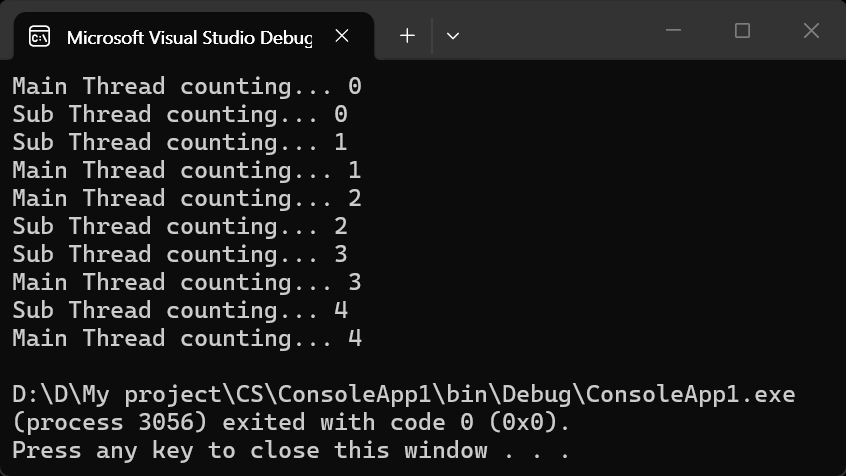
순서는 약간 달라질 수 있다.
이번엔 인수를 하나 받는 스레드를 만들어 보자. 아래 2가지 코드는 모두 같은 내용이지만 다른 방식으로 작성되었다.
using System;
using System.Threading;
using System.Threading.Tasks;

namespace ConsoleApp1
{
    internal class Program
    {
        static void Counter(object to)
        {
            int subCounter = 0;
            for (int i = 0; i < (int)to; i++)
            {
                Thread.Sleep(1000);
                Console.WriteLine($"Sub Thread counting... {subCounter++}");
            }
        }

        static void Main(string[] args)
        {
            Task task = new Task(Counter, 5);
            task.Start();

            int mainCounter = 0;
            for (int i = 0; i < 5; i++)
            {
                Thread.Sleep(1000);
                Console.WriteLine($"Main Thread counting... {mainCounter++}");
            }

            task.Wait();
        }
    }
}
using System;
using System.Threading;
using System.Threading.Tasks;

namespace ConsoleApp1
{
    internal class Program
    {
        static void Main(string[] args)
        {
            Action<object> Counter = (object to) =>
            {
                int subCounter = 0;
                for (int i = 0; i < (int)to; i++)
                {
                    Thread.Sleep(1000);
                    Console.WriteLine($"Sub Thread counting... {subCounter++}");
                }
            };

            Task task = new Task(Counter, 5);
            task.Start();

            int mainCounter = 0;
            for (int i = 0; i < 5; i++)
            {
                Thread.Sleep(1000);
                Console.WriteLine($"Main Thread counting... {mainCounter++}");
            }

            task.Wait();
        }
    }
}
인수가 있는 경우, Task.Run() 메서드에서 람다식으로 코드를 만드는 건 의미가 없는 것 같다.
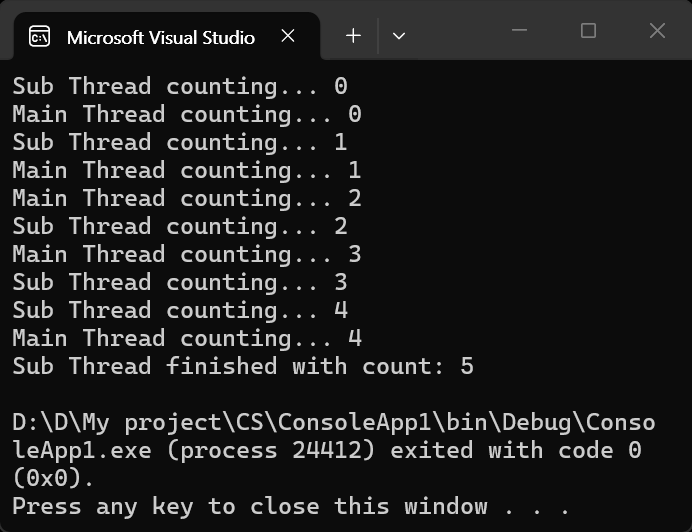
결과는 위와 같다.
이번엔 리턴값이 있는 스레드를 만들어 보자. 아래 2가지 코드는 모두 같은 내용이지만 다른 방식으로 작성되었다.
using System;
using System.Threading;
using System.Threading.Tasks;

namespace ConsoleApp1
{
    internal class Program
    {
        static int Counter()
        {
            int subCounter = 0;
            for (int i = 0; i < 5; i++)
            {
                Thread.Sleep(1000);
                Console.WriteLine($"Sub Thread counting... {subCounter++}");
            }

            return subCounter;
        }

        static void Main(string[] args)
        {
            Task<int> task = new Task<int>(Counter);
            task.Start();

            int mainCounter = 0;
            for (int i = 0; i < 5; i++)
            {
                Thread.Sleep(1000);
                Console.WriteLine($"Main Thread counting... {mainCounter++}");
            }

            task.Wait();
            Console.WriteLine($"Sub Thread finished with count: {task.Result}");
        }
    }
}
using System;
using System.Threading;
using System.Threading.Tasks;

namespace ConsoleApp1
{
    internal class Program
    {
        static void Main(string[] args)
        {
            Task<int> task = Task<int>.Run(() =>
            {
                int subCounter = 0;
                for (int i = 0; i < 5; i++)
                {
                    Thread.Sleep(1000);
                    Console.WriteLine($"Sub Thread counting... {subCounter++}");
                }

                return subCounter;
            });

            int mainCounter = 0;
            for (int i = 0; i < 5; i++)
            {
                Thread.Sleep(1000);
                Console.WriteLine($"Main Thread counting... {mainCounter++}");
            }

            task.Wait();
            Console.WriteLine($"Sub Thread finished with count: {task.Result}");
        }
    }
}
Action은 리턴값이 없는 메서드 전용이기 때문에 이 경우 Action을 사용할 수 없다.
순서는 약간 달라질 수 있다.
이번엔 인수도 있고 리턴값도 있는 스레드를 만들어 보자.
아래 2가지 코드는 모두 같은 내용이지만 다른 방식으로 작성되었다.
using System;
using System.Threading;
using System.Threading.Tasks;

namespace ConsoleApp1
{
    internal class Program
    {
        static int Counter(object to)
        {
            int subCounter = 0;
            for (int i = 0; i < (int)to; i++)
            {
                Thread.Sleep(1000);
                Console.WriteLine($"Sub Thread counting... {subCounter++}");
            }

            return subCounter;
        }

        static void Main(string[] args)
        {
            Task<int> task = new Task<int>(Counter, 5);
            task.Start();

            int mainCounter = 0;
            for (int i = 0; i < 5; i++)
            {
                Thread.Sleep(1000);
                Console.WriteLine($"Main Thread counting... {mainCounter++}");
            }

            task.Wait();
            Console.WriteLine($"Sub Thread finished with count: {task.Result}");
        }
    }
}
using System;
using System.Threading;
using System.Threading.Tasks;

namespace ConsoleApp1
{
    internal class Program
    {
        static void Main(string[] args)
        {
            Func<object, int> Counter = (object to) =>
            {
                int subCounter = 0;
                for (int i = 0; i < (int)to; i++)
                {
                    Thread.Sleep(1000);
                    Console.WriteLine($"Sub Thread counting... {subCounter++}");
                }

                return subCounter;
            };

            Task<int> task = new Task<int>(Counter, 5);
            task.Start();

            int mainCounter = 0;
            for (int i = 0; i < 5; i++)
            {
                Thread.Sleep(1000);
                Console.WriteLine($"Main Thread counting... {mainCounter++}");
            }

            task.Wait();
            Console.WriteLine($"Sub Thread finished with count: {task.Result}");
        }
    }
}
async, await를 사용해 보자.
아래 코드는 컴파일 에러가 발생한다. Main 함수에는 async가 단순하게 그냥 붙을 수 없다.
using System;
using System.Threading;
using System.Threading.Tasks;

namespace ConsoleApp1
{
    internal class Program
    {
    	// 컴파일 에러 발생
        static async void Main(string[] args)
        {
            await Task.Run(() => Count());

            int mainCounter = 0;
            for (int i = 0; i < 5; i++)
            {
                Thread.Sleep(1000);
                Console.WriteLine($"Main Thread counting... {mainCounter++}");
            }
        }

        static void Count()
        {
            int subCounter = 0;
            for (int i = 0; i < 5; i++)
            {
                Thread.Sleep(1000);
                Console.WriteLine($"Sub Thread counting... {subCounter++}");
            }

        }
    }
}
Main 함수에 단순하게 async가 붙으면 다음과 같은 에러가 발생한다.
Program does not contain a static 'Main' method suitable for an entry point
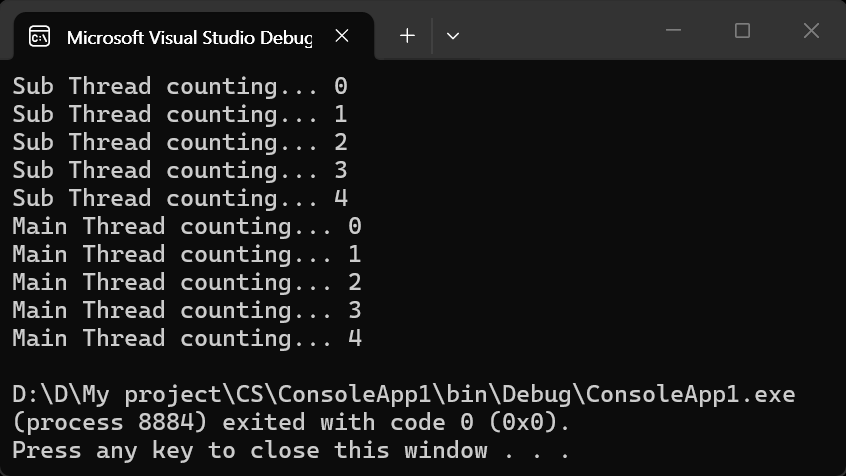
또, 아래와 같이 바꾸면 단일 스레드처럼 동작한다.
using System;
using System.Threading;
using System.Threading.Tasks;

namespace ConsoleApp1
{
    internal class Program
    {
        static async Task Main(string[] args)
        {
            await Task.Run(() => Count());

            int mainCounter = 0;
            for (int i = 0; i < 5; i++)
            {
                Thread.Sleep(1000);
                Console.WriteLine($"Main Thread counting... {mainCounter++}");
            }
        }

        static void Count()
        {
            int subCounter = 0;
            for (int i = 0; i < 5; i++)
            {
                Thread.Sleep(1000);
                Console.WriteLine($"Sub Thread counting... {subCounter++}");
            }

        }
    }
}
await 키워드는 이 비동기 작업(서브 스레드)이 완전히 끝날 때까지 여기서 기다리겠다는 의미이기 때문이다.
아래와 같이 바꿔보자.
using System;
using System.Threading;
using System.Threading.Tasks;

namespace ConsoleApp1
{
    internal class Program
    {
        static async Task Main(string[] args)
        {
            // await 없이 Task를 실행(시작)만 하고 변수에 담아둔다.
            // 이 시점부터 서브 스레드가 백그라운드에서 동작한다.
            Task countTask = Task.Run(() => Count());

            // 메인 스레드는 멈추지 않고 자신의 루프 작업을 동시에 수행한다.
            int mainCounter = 0;
            for (int i = 0; i < 5; i++)
            {
                // 참고: 비동기 메서드(async) 내에서는 Thread.Sleep 대신 await Task.Delay를 사용하는 것을 권장.
                await Task.Delay(1000);
                Console.WriteLine($"Main Thread counting... {mainCounter++}");
            }

            // 메인 스레드의 작업이 다 끝나면, 메인 프로세스가 종료되기 전에
            // 서브 스레드의 작업이 모두 완료되었는지 마지막으로 확인(대기).
            await countTask;
        }

        static void Count()
        {
            int subCounter = 0;
            for (int i = 0; i < 5; i++)
            {
                Thread.Sleep(1000);
                Console.WriteLine($"Sub Thread counting... {subCounter++}");
            }
        }
    }
}
아니면 아래와 같이 다른 함수에서 async, await를 사용하도록 코드를 바꾼다.
using System;
using System.Threading;
using System.Threading.Tasks;

namespace ConsoleApp1
{
    internal class Program
    {
        static void Main(string[] args)
        {
            Count();

            int mainCounter = 0;
            for (int i = 0; i < 5; i++)
            {
                Thread.Sleep(1000);
                Console.WriteLine($"Main Thread counting... {mainCounter++}");
            }
        }

        static async void Count()
        {
            await Task.Run(async () =>
            {
                int subCounter = 0;
                for (int i = 0; i < 5; i++)
                {
                    // Use Task.Delay instead of Thread.Sleep to avoid blocking the thread
                    await Task.Delay(1000);
                    Console.WriteLine($"Sub Thread counting... {subCounter++}");
                }
            });
        }
    }
}
이번엔 반환값이 있는 함수를 살펴보자.
using System;
using System.Threading;
using System.Threading.Tasks;

namespace ConsoleApp1
{
    internal class Program
    {
        static void Main(string[] args)
        {
            Task<int> taskResult = Count();

            int mainCounter = 0;
            for (int i = 0; i < 5; i++)
            {
                Thread.Sleep(1000);
                Console.WriteLine($"Main Thread counting... {mainCounter++}");
            }

            int result = taskResult.Result;
            Console.WriteLine($"Result from Sub Thread: {result}");
        }

        static async Task<int> Count()
        {
            return await Task.Run(() =>
            {
                int subCounter = 0;
                for (int i = 0; i < 5; i++)
                {
                    Thread.Sleep(1000);
                    Console.WriteLine($"Sub Thread counting... {subCounter++}");
                }

                return subCounter;
            });
        }
    }
}
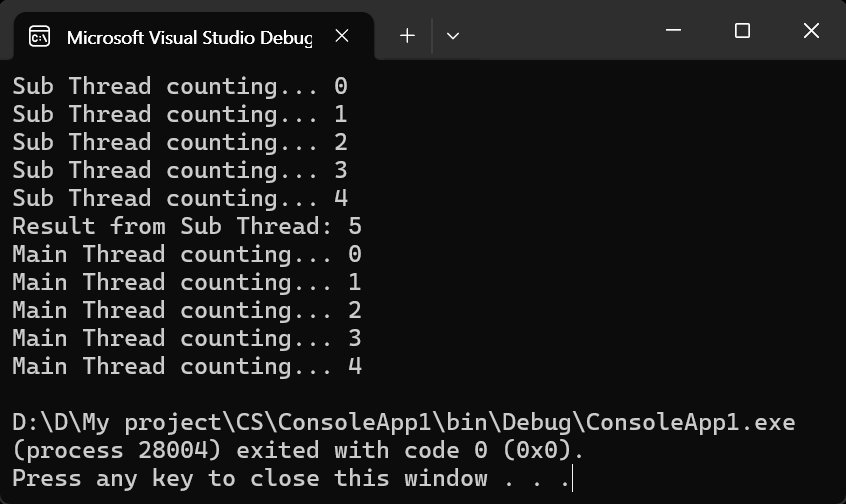
위 코드를 아래와 같이 바꾸면 단일 스레드처럼 작동하게 된다. 조심하자.
using System;
using System.Threading;
using System.Threading.Tasks;

namespace ConsoleApp1
{
    internal class Program
    {
        static void Main(string[] args)
        {
            int taskResult = Count().Result;
            // Task가 시작되자마자 바로 Result를 요구하고 있다.
            // 메인 스레드가 진행하지 못하게 된다.
            Console.WriteLine($"Result from Sub Thread: {taskResult}");

            int mainCounter = 0;
            for (int i = 0; i < 5; i++)
            {
                Thread.Sleep(1000);
                Console.WriteLine($"Main Thread counting... {mainCounter++}");
            }
        }

        static async Task<int> Count()
        {
            return await Task.Run(() =>
            {
                int subCounter = 0;
                for (int i = 0; i < 5; i++)
                {
                    Thread.Sleep(1000);
                    Console.WriteLine($"Sub Thread counting... {subCounter++}");
                }

                return subCounter;
            });
        }
    }
}
Parallel 클래스를 사용해서 간편하게 스레드를 사용해 보자.
using System;
using System.Threading;
using System.Threading.Tasks;

namespace ConsoleApp1
{
    internal class Program
    {
        static void Main(string[] args)
        {
            Parallel.For(0, 10, DoSomething);

            // Alternatively, you can use a lambda expression:
            //Parallel.For(0, 10, i =>
            //{
            //    DoSomething(i);
            //});
        }

        static void DoSomething(int i)
        {
            Thread.Sleep(1000);
            Console.WriteLine($"Job {i} completed.");
        }
    }
}
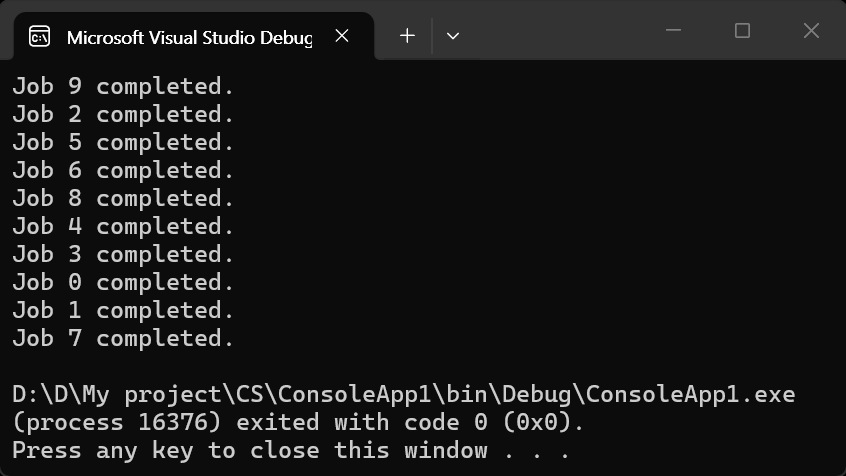
하나씩 처리하면 10초가 걸리는 작업이 10개의 스레드가 생성되어 1초 만에 끝난다. (스레드는 CPU 코어의 갯수에 따라 다르게 생성된다)
#include <iostream>
#include <thread>

void counter(int id, int max) {
	for (int i = 0; i < max; i++) {
		std::cout << "id: " << id << ", : " << i << std::endl;
		std::this_thread::sleep_for(std::chrono::seconds(1));	// 1초 대기
	}
}

int main() {
	std::thread t1(counter, 1, 10);
	std::thread t2(counter, 2, 10);

	t1.join();
	t2.join();

	return 0;
}
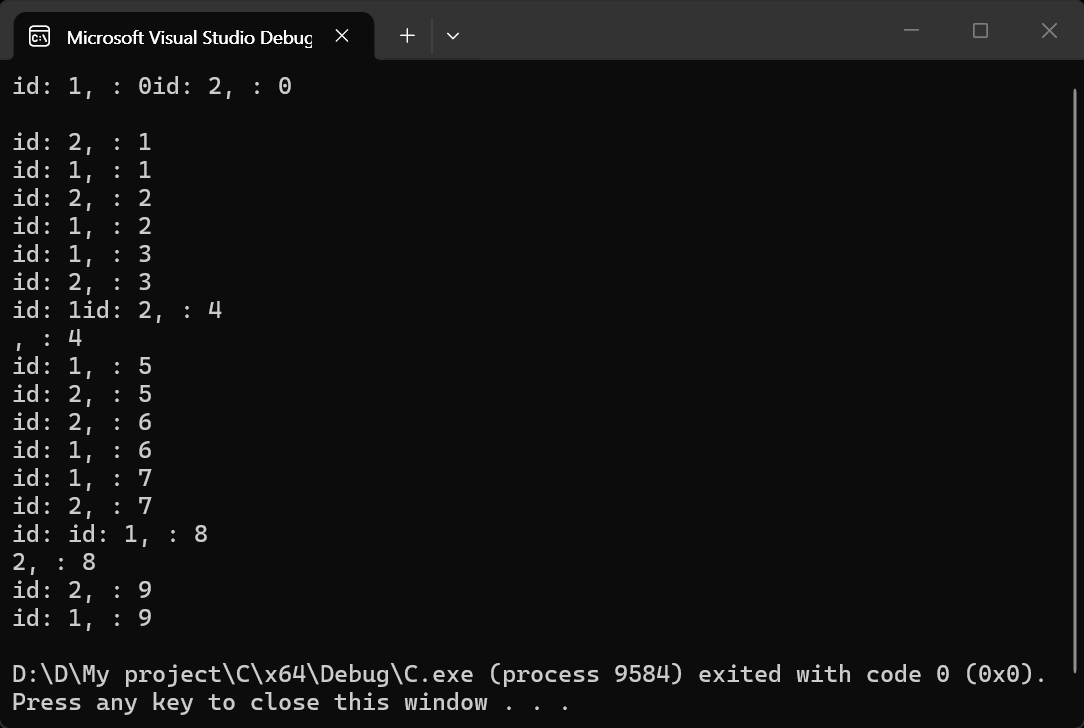
cout 출력 도중 컨텍스트 스위칭이 발생하며 출력이 엉망이 되어 버렸다.
뮤텍스를 사용한 멀티스레드.
#include <iostream>
#include <thread>
#include <mutex>

std::mutex m;

void counter(int id, int max) {
	for (int i = 0; i < max; i++) {
		m.lock();
		std::cout << "id: " << id << ", : " << i << std::endl;
		m.unlock();
		std::this_thread::sleep_for(std::chrono::seconds(1));
	}
}

int main() {
	std::thread t1(counter, 1, 10);
	std::thread t2(counter, 2, 10);

	t1.join();
	t2.join();

	return 0;
}
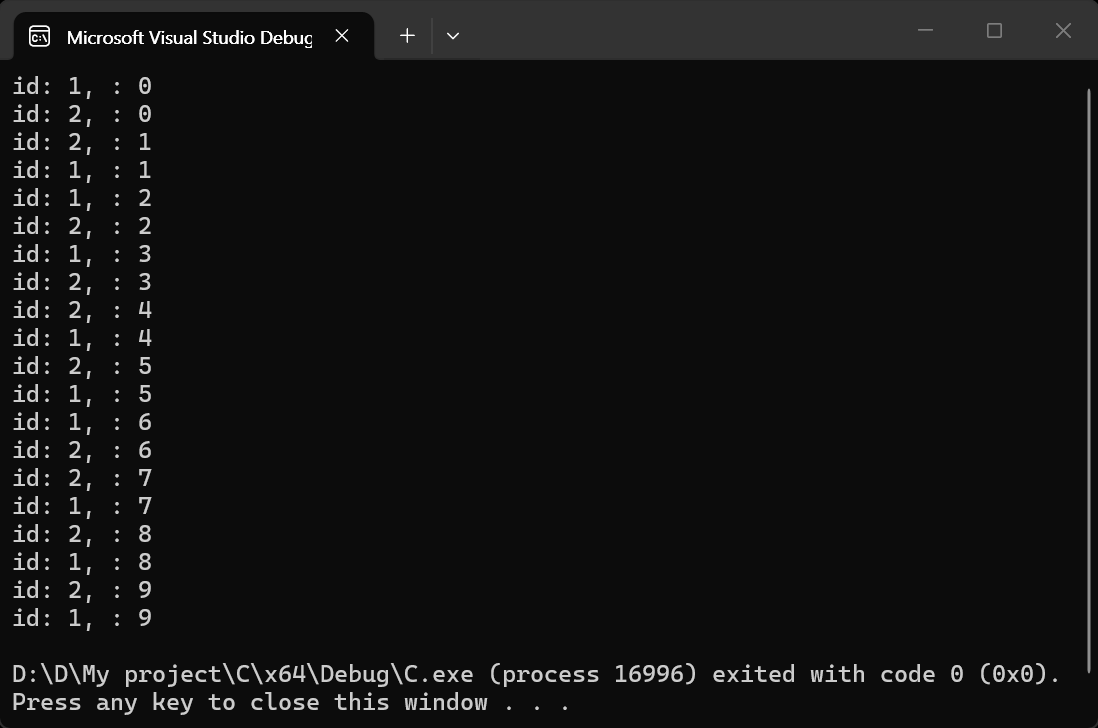
출력이 깔끔하다.
하지만 위 코드에 나오는 뮤텍스의 lock(), unlock()를 직접 호출하면 안 된다. 뮤텍스 락은 일종의 리소스이기 때문에 거의 대부분 RAII 원칙에 따라 독점적으로 획득된다. 뮤텍스에 락을 정확히 걸거나 해제하는 작업을 쉽게 처리할 수 있는 lock_guard, unique_lock 등의 락 클래스를 사용하자.
lock_guard를 사용한 뮤텍스 멀티 스레드.
#include <iostream>
#include <thread>
#include <mutex>

std::mutex m;

void counter(int id, int max) {
	for (int i = 0; i < max; i++) {
		{
			// 락이 필요한 블럭
			std::lock_guard lock(m);
			std::cout << "id: " << id << ", : " << i << std::endl;
		}
		std::this_thread::sleep_for(std::chrono::seconds(1));
	}
}

int main() {
	std::thread t1(counter, 1, 10);
	std::thread t2(counter, 2, 10);

	t1.join();
	t2.join();

	return 0;
}
- target is the callable object to be invoked by the run() method. Defaults to None, meaning nothing is called. - args is a list or tuple of arguments for the target invocation. Defaults to ().
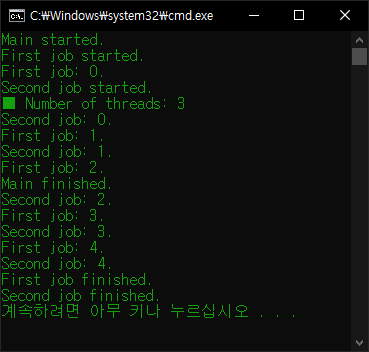
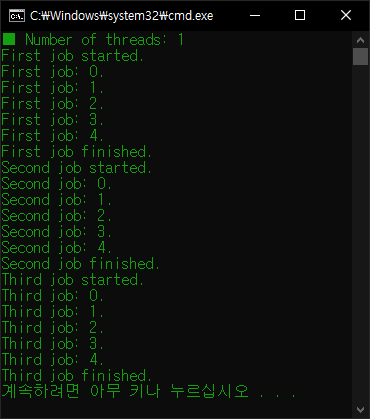
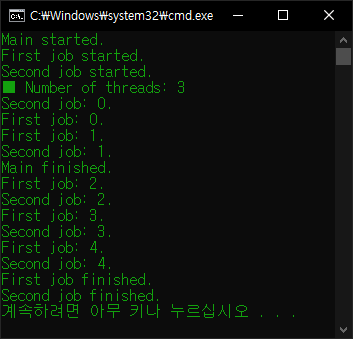
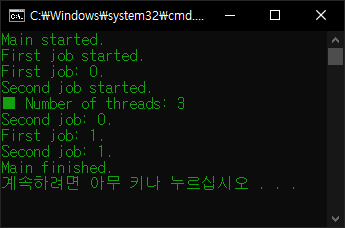
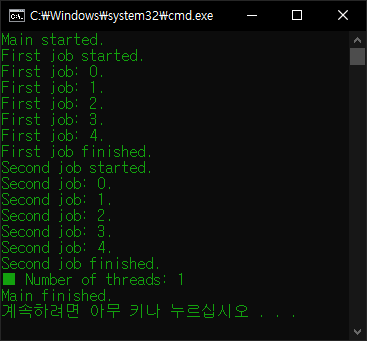
print(f"■ Number of threads: {threading.active_count()}")
time.sleep(1)
print("Main finished.")
■ join(timeout=None)
- Wait until the thread terminates. This blocks the calling thread until the thread whose join() method is called terminates – either normally or through an unhandled exception – or until the optional timeout occurs. - When the timeout argument is present and not None, it should be a floating point number specifying a timeout for the operation in seconds (or fractions thereof). As join() always returns None, you must call is_alive() after join() to decide whether a timeout happened – if the thread is still alive, the join() call timed out. - When the timeout argument is not present or None, the operation will block until the thread terminates. - A thread can be joined many times.